

Fence Repair vs. Replacement: 8 Signs & Cost Thresholds
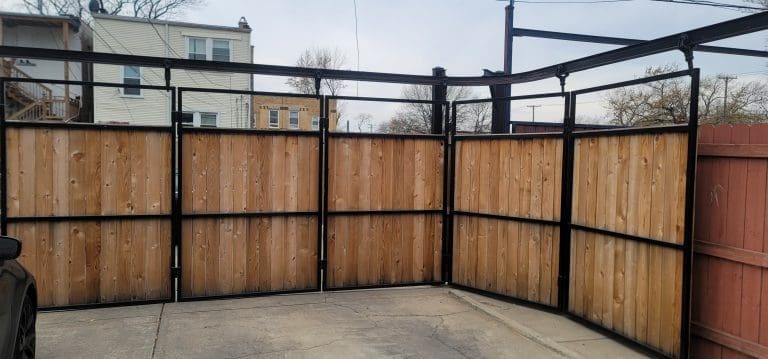
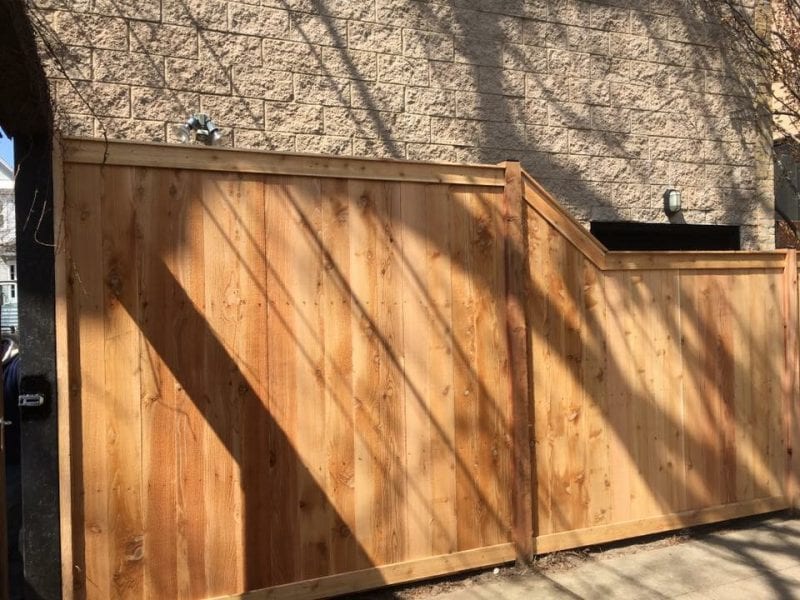
TL;DR-Fence Repair vs. Replacement
- Repair when damage is isolated (≤20–25% of sections), posts are solid, and hardware can be refreshed.
- Replace when posts/footings fail, damage exceeds ~30–40%, or the fence can’t meet your current privacy/security needs.
- In Chicago, freeze–thaw, salt, and wind accelerate wear—check posts, rails, and gates first.
New to our work in Chicago? Osceola Fence has served the city since 1975—see who we are and learn more about our fence company in Chicago..
Quick Comparison
| Situation | Repair makes sense when… | Replace makes sense when… |
|---|---|---|
| Damage extent | ≤20–25% of boards/panels/sections affected | ≥30–40% affected or recurring failures |
| Posts & footings | Posts are plumb/solid; footing intact | Leaning/rotted posts; heaved or undersized footings |
| Material condition | Surface wear, minor cracks, loose hardware | UV fatigue, rot, rust-through, brittle panels |
| Gates | Sag due to hardware; frame ok | Frame twisted, hinges tearing out, latch posts failing |
| Purpose change | Same privacy/security needs | Need taller, more private, or more secure system |
| Costs | Spot fixes < 1/3 price of new fence | Fixes approach ≥ 1/2 of full replacement |
| Timeline | You need a quick, local fix | You want long-term reliability + warranty |
The 8 Signs to Check (Chicago-specific)
Leaning or Heaved Posts
Freeze–thaw can lift shallow footings. If 1–2 posts lean, repair; if several lean or footings are undersized, plan replacement.
See material options: wrought iron fences · wood fences · vinyl fences · chain link fences
Rot, Rust-Through, or Brittle Panels
Wood: soft posts at grade, widespread rot = replacement.
Iron/Steel: surface rust is repairable; rust-through on rails/pickets suggests section or full replacement.
Vinyl: hairline cracks are repairable; brittle panels across the yard favor replacement.
Gate Problems (the #1 complaint)
Sagging from hinges/latch = repair (hardware or anti-sag kit).
Twisted frames or posts pulling out of concrete = replace gate assembly or consider security gates & operators.
Wind Damage & Loose Rails
After winter gusts, check rails and fasteners. A few re-secures = repair. Repeated failures across sections = replacement. Learn more about Chicago Wind load (30 psf)
Road Salt & Sidewalk Melt
Salt along alleys/parkways accelerates corrosion and wood drying. If salt has caused widespread decay or coating failure, consider materials that hold up better in those zones (e.g., coated chain link or vinyl).
Privacy & Height Gaps
If you can see new neighbor windows/patios, repairing old sections won’t solve privacy. Replacement with board-on-board (wood) or privacy panels (vinyl/composite) helps.
Outdated Layout or Access
New vehicles, dumpsters, or deliveries? Repairs won’t change layout. Replacement lets you add wider gatesor slide/cantilever systems.
Permit & Code Alignment
Repairs in-kind typically don’t need full permits; height changes, new gates, or full replacement often do. See our permit checklist.
Cost Thresholds (Rule-of-Thumb Ranges)
These are ballpark patterns to help decision-making; on-site conditions set the actual price.
Repair usually wins when:
Wood: replacing ≤20 boards/2–3 rails or 1–2 posts
Iron/Steel: surface rust prep + repaint or welds on 1–2 sections
Vinyl: 1–2 panels, minor hardware swap
Chain Link: re-stretch mesh, replace 1 top rail, swap 1 terminal post
Replace when repair approaches ~50–60% of a comparable new build, or when posts/gates keep failing.
Consider TCO (total cost of ownership): if you plan to stay 10+ years, a new layout/material often pencils out vs. repeated repairs.
Material-by-Material Guidance
Wood (Cedar)
Repair: board swaps, rail fixes, limited post resets.
Replace: widespread rot at grade, numerous leaning posts, privacy gaps you can’t solve by patching.
Explore cedar wood fence options.
Wrought Iron / Steel
Repair: grind/spot-prime/paint; reweld loose pickets; hinge/latch upgrades.
Replace: rust-through, warped frames, or failing posts.
See wrought iron fences.
Vinyl
Repair: single-panel cracks, hardware, latch posts.
Replace: multiple brittle panels, repeated winter cracks, or layout change.
Learn about vinyl privacy panels.
Chain Link
Repair: re-stretch fabric, replace top rail/tension bands, fix one gate.
Replace: bent framework across long runs, corroded terminals, layout upgrades.
View chain link solutions.
Installation Notes (to avoid repeat repairs)
- Post depth: bottoms below frost line (≈36–42″+).
- Footings: bell-shaped base, gravel under posts for drainage.
- Hardware: stainless/coated; UL-325 safety on automated gates.
- Salt exposure: rinse runs each spring; choose coatings/materials accordingly.
- Wind: reinforce long privacy spans; consider metal inserts in vinyl rails and framed gates.
FAQs
- Is a permit required for repairs?
Like-for-like repairs usually don’t; height changes, new gates, or full replacement often do. Check our permit checklist. - Can you replace only the gate?
Yes—often the best move if the run is sound. See security gates & operators. - What if only a few posts lean?
We can reset select posts and re-secure rails. If many lean, posts were likely too shallow—replacement makes more sense. - Which material is most repair-friendly?
Wood (board-level fixes) and chain link (component swaps). Vinyl and iron fence repairs are efficient when damage is localized.
Not sure which way to go?
- Book a free on-site estimate. We’ll inspect posts, footings, and gates, and give you an accurate fence repair vs. replacement side-by-side so you can decide with confidence.
Start here: Osceola Fence — Chicago or request an estimate.