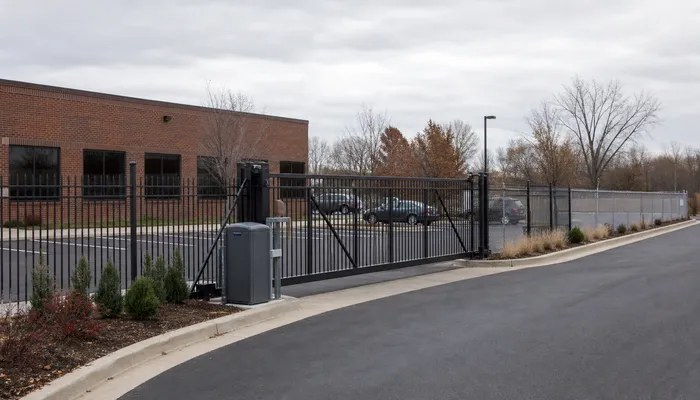

Property managers and business owners comparing contractors across Chicago’s North Shore usually spend their time on panels, gates, and price. The document that decides how the next several years actually go is the warranty. Knowing what to look for in a commercial fence warranty — real coverage, written exclusions, required maintenance, and the records that support a claim — is what separates a guarantee you can use from one that only looks reassuring on a bid sheet. The same criteria apply to a distribution yard, a retail strip, a multifamily parking court, or a school perimeter from Glenview to Skokie to Wilmette.
An Illinois Market Where Scale And Weather Both Matter
Illinois is a large, varied state. Its population is estimated at roughly 12.7 million, with the Chicago metropolitan area in the northeast holding most of the commercial construction, distribution, and property management activity. That matters in a practical way for fence buyers: commercial perimeters here are usually measured in hundreds or thousands of linear feet, they sit in the path of delivery trucks and snowplows, and they are often one part of a larger plan that includes gates, readers, and cameras.
The state population figure comes from the U.S. Census ACS five-year profile for Illinois, and the state’s geography, river borders, and Chicago’s position in the northeast are summarized in Wikipedia’s Illinois overview. Those numbers set the market context. Warranty decisions themselves are local, property-specific, and made in writing.
Why Commercial Fence Warranties Read Differently Than Residential Ones
A residential fence warranty usually answers one question: will the installer stand behind the work if a post leans or a panel fails? Commercial documents carry more moving parts, because a commercial perimeter is assembled from several warrantied products. A single property can combine chain link fabric and posts, ornamental iron panels, vinyl or composite screening, a cantilever slide gate, an automatic operator, and an access reader.
Product coverage travels with the material and comes from the manufacturer. Workmanship coverage comes from the contractor who set the footings and hung the gates. Equipment coverage follows the gate operator or access-control supplier. A document worth signing states clearly which party covers which component, for how long, and what the property owner has to do to keep that coverage alive.
What To Look For In A Commercial Fence Warranty: The Coverage That Matters
Term length is the number everyone reads first, and it is often the least informative part of the document. The useful questions are about components. Before signing, ask for written confirmation on each of these:
- Material and finish coverage. What is covered if galvanized steel or a powder coating begins to fail, and whether corrosion from de-icing salt or chemical exposure is handled differently than ordinary weathering.
- Workmanship on footings and framing. Post depth, concrete, rail attachment, and who is responsible if a run settles or drifts out of line.
- Hardware and fasteners. Hinges, latches, rollers, track, and the small parts that wear out first on a gate cycling dozens of times a day.
- Gates, operators, and access control. Whether the operator, control board, safety sensors, and loop detectors carry separate coverage, and whether diagnostic labor is included or billed.
- Repair versus replacement. Whether a damaged section can be patched, or whether the terms require full panel or gate replacement.
- Points of contact. Who you call, what information they need, and whether the agreement sets any expectation for how quickly service is scheduled.
If any of those answers exists only in conversation, ask for it to appear in the contract before work begins.
Exclusions And Conditions Worth Reading Twice
Exclusions are where most disagreements begin, which is why they belong near the top of any checklist for what to look for in a commercial fence warranty. Ask how the written terms treat vehicle impact, forklift and plow damage, vandalism, fire, wind events, standing water at post bases, and field modifications made by someone other than the original installer.
Maintenance conditions deserve their own question. Commercial agreements commonly assume the owner will keep the fence line clear of debris, touch up scratches before corrosion spreads, and have gate operators serviced on a set interval. If the document names an interval, that interval is an obligation rather than a suggestion. Put it on a calendar the same week you sign.
Documentation And Records That Keep A Claim Straightforward
The strongest claim is the one you can document. Keep the signed proposal, the material specification sheet, the site plan or survey, permit paperwork, and photographs taken during installation — especially photos of the posts in their footings before backfill. Those images are difficult to recreate later and often decide whether a footing failure is treated as a workmanship issue or as a site condition.
Portfolio owners should organize that paperwork per address rather than per contractor. A fence contractor in Skokie, IL who handles multi-property work will typically keep specifications and installation photos on file, which saves a scramble when a claim is filed two winters later. At handoff, ask which documents you will receive and where each component’s warranty certificate is recorded.
Matching The Warranty To The Fence System You Buy
Coverage tracks the system. Chain link and galvanized steel products often carry the longest material terms because the coating is applied in a controlled factory setting. Powder-coated ornamental iron depends heavily on surface preparation and on how the finish is repaired after a scratch. Vinyl and composite are generally covered against cracking, fading, and abnormal discoloration, with exclusions for impact and heat sources. Wood tends to be the most limited, since warping, splitting, and rot depend on grade, treatment, and drainage at the base.
Gates deserve the closest read, because they move. Add an automatic operator, safety loops, and card readers and you have added equipment with its own service demands. A commercial fence installation in Glenview, IL on a warehouse or retail site might pair a long chain link run with a cantilever slide gate and a high-cycle operator — three components and potentially three warranty documents. If the scope is still being shaped, Commercial Fences: Tailoring Solutions to Business Needs explains how the mix of materials and access points gets defined.
Applying The Same Checklist Across Chicago’s North Shore
The North Shore corridor is compact, but the properties inside it are not identical. Glenview, Skokie, and Wilmette all sit in Cook County, and each village runs its own permit and zoning review, so requirements can shift from one side of a property line to the other. Village boundaries and township assignments are mapped through OpenStreetMap’s entry for Wilmette, IL and comparable public records for the other two communities.
Scale affects maintenance planning. Skokie is the largest of the three, with an estimated population of about 66,400, followed by Glenview at roughly 47,700 and Wilmette at about 27,600. More rooftops and more commercial frontage generally mean more linear feet to inspect and more gate cycles to log each day. Along the lakefront edge of the corridor, commercial fencing in Wilmette, IL often involves tighter parcels where screening and sight lines matter as much as perimeter length, while larger sites elsewhere in the corridor lean toward longer, simpler runs.
A Maintenance Rhythm That Protects Commercial Coverage
A warranty is only as useful as the fence it covers, and commercial fence lines fail predictably. Vehicles bend posts. Standing water at a base accelerates corrosion. Gate tracks collect grit. A scratch in a coating opens the door to rust long before the structure is compromised.
A workable rhythm is a walk-through twice a year — once in early spring after plow season and once in late fall before the ground freezes — plus gate service at whatever interval the terms require. Log findings, date them, and photograph anything that looks like a developing failure. That record turns a claim into a conversation. Our guide to keeping your commercial fence in top shape covers the inspection points in more detail.
How Osceola Fence Approaches Craftsmanship And Guarantees
Osceola Fence & Security Corp. has worked in Chicago-area fencing for more than 50 years. Iron and ornamental work is fabricated in-house, so custom gates and railings are not handed off to a third party, and the team helps property owners prepare permit and zoning paperwork instead of leaving them to work through the village process alone. Qualifying projects are covered by the 1 Year Certified Craftsmanship Guarantee™.
For larger scopes, budget timing is often the deciding factor. Osceola Fence offers financing through the GreenSky® Loan Program for qualified customers, with a simple application, a fast credit decision, multiple options, and no prepayment penalty. Financing is subject to credit approval and applicable GreenSky® terms and conditions.
Frequently Asked Questions About Commercial Fence Warranties
How long should a commercial fence warranty last?
It depends on the component. Factory-coated steel and chain link products usually carry the longest material terms, workmanship coverage on footings and framing is typically shorter, and gate operators and access-control equipment follow the manufacturer’s own schedule. Ask for each term separately rather than accepting one number for the whole project.
What should I look for in a commercial fence warranty before I sign?
Four things: a written list of covered components, a written list of exclusions, the maintenance you are required to perform, and a clear contact path when something fails. If any of those is missing, ask for it in writing before work begins.
Does the warranty cover automatic gates and access control equipment?
Usually through separate manufacturer coverage for the operator and control equipment. Confirm whether diagnostic labor is included, and whether the operator has to be serviced on a set interval to keep coverage valid.
Do fence permit rules differ between North Shore villages?
Yes. Each municipality runs its own permit and zoning review, and requirements can vary by district, yard, and property type, so confirm the current process with the local building department before ordering materials. In Illinois, excavation for posts and footings also requires advance notice through JULIE/Illinois 811.
Can a commercial fence warranty be transferred if I sell the property?
Sometimes, and sometimes only within a limited window. Ask before signing and get the answer into the contract, because transferability affects both resale and how the next owner approaches maintenance.
Does having a warranty mean maintenance can wait?
No. Most commercial agreements assume the owner keeps the line clear, repairs coating damage, and services moving parts. Deferred maintenance is one of the most common reasons a claim gets denied.
If you are comparing bids or reading a warranty document for a commercial property on the North Shore, start with the coverage language rather than the term length. Call Osceola Fence at (773) 417-3107 with the property address, approximate linear footage, and any gate or access-control requirements, or send the same details through the contact page to schedule a site visit.