Skip to content


If you are asking how long does a wood fence last in an Illinois winter, the honest answer starts with the site, not a sales sheet. A wood fence in Elgin and across Illinois can serve for many years, but snow, freeze-thaw cycles, wet soil, wind, sun, and maintenance all influence the outcome. There is no single lifespan that fits every yard, and any contractor who promises one number without seeing the property is guessing.
Illinois is a Midwestern state that borders Lake Michigan, and local conditions vary enough that a fence in one yard can age differently from a fence a few miles away (Illinois overview). The practical question is not only how long wood lasts. It is how well the wood, posts, drainage, hardware, and finish work together through repeated winter stress.
Illinois Winters Put Wood Fences Under Real Stress
Wood is a natural material, and it responds to moisture. In Illinois, winter stress often arrives as a sequence: rain or snow saturates the ground, temperatures drop, the soil freezes, then a thaw releases water again. That cycle can lift a post, open a joint, or keep the bottom rail wet for longer than the wood can dry.
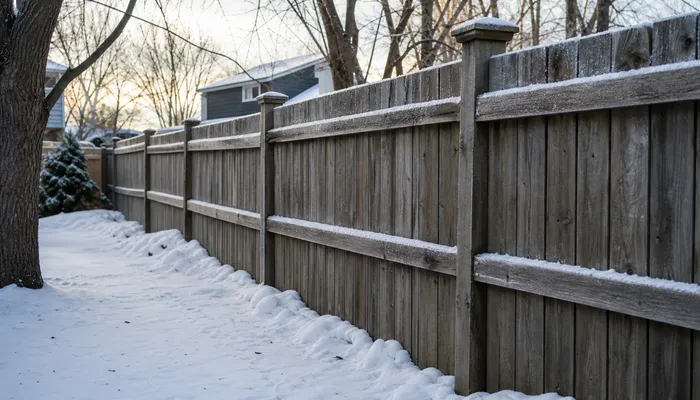
Snow load matters too. A solid privacy fence can hold snow against the panels, especially on the side that catches wind. When that snow melts, water runs down the boards and collects near the base. If the grade slopes toward the fence instead of away from it, the post bottoms and lower rails stay damp. That is one reason two fences built from the same material can age differently on the same street.
The Main Factors That Decide Wood Fence Longevity
That is why the real answer to how long does a wood fence last is a checklist of conditions rather than a calendar. The most important factors are:
- Wood species and treatment. Pressure-treated lumber, cedar, and other wood types behave differently when wet. The right material for a privacy fence may not be the right material for a low garden fence.
- Post setting and footing. A post needs stable soil, proper depth for the site, and drainage that does not trap water. A post set in a low spot can fail long before the boards above it.
- Drainage and grade. Water should move away from the fence line. Gutters, downspouts, patios, and neighboring grades can all send water toward a post base.
- Hardware and fasteners. Coated or galvanized fasteners help resist corrosion. Rusted brackets and nails can stain wood and weaken connections.
- Finish and maintenance. A stain or seal can slow moisture uptake, but it cannot rescue a fence with poor drainage or buried post bases.
- Wind exposure and fence design. A tall solid fence catches more wind than an open picket or rail design. Gates and end posts take extra force.
What Freeze-Thaw, Snow and Moisture Do to Wood
Freeze-thaw movement is the quiet problem. Water enters small cracks, freezes, expands, and then leaves a slightly larger gap when it melts. Over several winters, that can loosen joints, lift rails, and make a gate drag. Snow itself is not usually the enemy. The bigger issue is snow that sits against the fence and keeps the wood wet while temperatures rise and fall.
Moisture also affects appearance. You may see dark streaks, green growth on shaded panels, rust stains from fasteners, or gray wood fibers after a wet season. Some of that is cosmetic, and some points to a connection or drainage problem. The useful move is to inspect after the thaw, not to wait until the fence is leaning.
A Winter Inspection Checklist for Illinois Properties
A short walk after the last hard freeze can catch small problems before they become replacement costs. Check the fence line in daylight and look for changes from the previous year.
- Look for leaning posts, lifted rails, and boards that have pulled away from the frame.
- Push gently on gates and latches. A gate that suddenly drags may signal a post or hinge problem.
- Check where snow and meltwater collect. If water stands at the base, the fence will stay wet longer.
- Look for rust on nails, screws, brackets, and hinges.
- Inspect the bottom of the fence for rot, soft wood, or soil piled against the boards.
- Note any panels that hold snow or catch wind more than the rest of the fence.
Repair or Replace After an Illinois Winter
Not every winter problem means a new fence. If one or two boards are loose, a gate needs adjustment, or a single post is leaning, a targeted repair may be enough. The key is to find the cause. A post that leans because the soil shifted is a different job from a post that leans because the wood has rotted at the base.
If a post is leaning but the surrounding panels are sound, start with the cause rather than the symptom. Our guide to fix a leaning fence post explains the difference between a simple reset and a footing problem. Replacement makes more sense when several posts are soft, the lower rails are failing, or the fence no longer meets the property’s privacy and safety needs.
Elgin as One Illinois Example
Elgin sits in Kane County, northwest of Chicago along the Fox River (Elgin overview). A wood fence on an Elgin lot faces the same basic winter forces as fences elsewhere in northern Illinois: wet soil, freeze-thaw movement, snow against panels, and wind. The site details still decide the outcome. A fence near a downspout, a low corner, or a shaded side yard may need more attention than a fence on higher, drier ground.
For replacement work, Elgin residential fence projects are commonly handled through the city’s Quick Permit Application and zoning review, and a final inspection is required. Confirm current rules with the City of Elgin Community Development Department before work begins. Utility locating is also part of responsible planning before any digging for posts.
Materials and Finishes That Support a Longer Service Life
No wood fence is maintenance-free, but material choices can make maintenance easier. Pressure-treated wood is common for posts and structural parts because it is made to handle ground contact. Cedar is chosen for its natural resistance and appearance, though it still needs care. The best choice depends on budget, privacy needs, design, and how much upkeep the property owner wants.
Finishes matter, but timing matters too. A fresh coat of stain or seal on dry wood can help slow moisture uptake. Applying a finish over damp wood or trapping water behind a heavy coating can create new problems. For a practical routine, see our wood fence care routine.
Why Maintenance Timing Matters More Than a Single Lifespan Number
How long does a wood fence last often comes down to whether small repairs happen in spring or wait until fall. A loose rail that is reattached early may add years of service. The same rail left hanging can pull on posts and speed up damage. A post base that stays wet for one season may survive. The same base left wet for several seasons may rot through.
This is why a wood fence should be judged by its weakest points. Look at the posts, the bottom rails, the gate hinges, and the drainage first. The visible boards are only part of the story.
FAQs About Wood Fence Durability in Illinois
How Long Does a Wood Fence Last in Illinois Winters?
There is no single answer to how long does a wood fence last in every Illinois yard. A fence with sound wood, dry post bases, good hardware, and regular care can serve for many years. A fence with poor drainage, buried boards, or deferred repairs can need major work much sooner.
Does Snow Itself Damage Wood Fences?
Snow is less of a problem than the moisture and freeze-thaw movement that follow it. Snow packed against a fence can keep the wood wet and add weight to panels. The bigger risk is water that cannot drain away from posts and lower rails.
Can a Leaning Fence Post Be Fixed After Winter?
Often it can, but the cause matters. A post lifted by frost or loosened by soil may be reset. A post rotted at the base may need replacement. Check the wood first, then the footing and drainage.
Does Elgin Require a Permit for a Wood Fence Replacement?
Elgin lists fences among common residential projects that use a Quick Permit Application, and fence projects are subject to zoning approval. A final inspection is required after completion. Review the Elgin fence quick guide and confirm current requirements with the city before starting.
What Maintenance Helps a Wood Fence Last Longer?
Keep water away from post bases, clear snow that packs against panels, tighten loose hardware, repair small board and rail problems early, and apply stain or seal only when the wood is dry and ready. Inspect after each winter thaw rather than waiting for visible leaning.
Should a Wood Fence Be Stained or Sealed Before Winter?
A finish can help, but the wood must be dry and clean enough to accept it. If a fence is already holding moisture or has active rot, sealing over the problem will not fix it. Repair and drainage come first.
If you are planning a repair, replacement, or a new wood fence in Elgin, start with the local service page: wood fence installation in Elgin, IL. The same inspection habits apply across Illinois, but the site details decide the right next step.