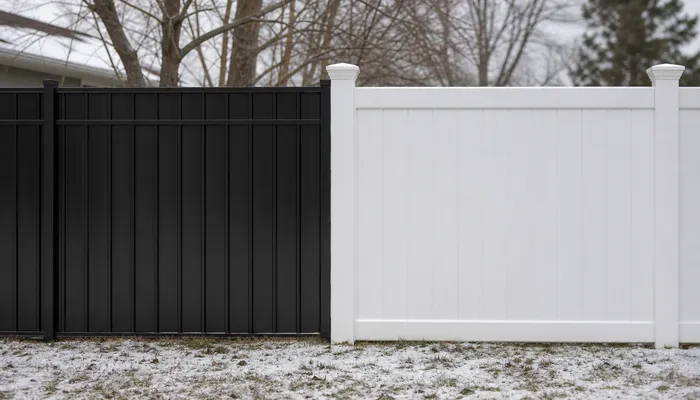

Chicago winters do not test a fence politely. They work on it from three directions at once: frost lifting and dropping the soil beneath the posts, lake-effect snow pressing against the panels for weeks, and road salt thrown up from the alley every time a plow passes. When homeowners start comparing a vinyl vs steel fence, the conversation usually opens with appearance and ends with how each material survives a season like that, year after year.
Both materials perform in this climate when they are installed properly, and each one asks something different of the owner. What follows is a practical look at what winter actually does to a fence line, where steel earns its place, where vinyl quietly wins, and how to make the call for your own property.
What Chicago Winters Put a Fence Through
Freeze-thaw is the least visible force and often the most consequential. Soil moisture expands as it freezes and settles as it thaws, and across a single winter that cycle can repeat many times. A post set too shallow, or backfilled with the wrong material, will start to lean long before the panel above it shows any problem. Installation depth and base preparation matter at least as much as the material mounted on top of them.
Road salt is the second pressure point. It arrives as a fine spray off the pavement and settles on whatever faces the street, driveway or service alley. On steel, salt is a threat to the coating rather than to the core; wherever the finish has been nicked, salt and moisture have somewhere to work. On vinyl, salt leaves a film that rinses away, though the surface still benefits from an occasional wash so the color reads evenly along the entire run.
Then there is the snow itself. Chicago’s position on the western shore of Lake Michigan drives the lake-effect bands that bury some neighborhoods while leaving others nearly clear, and the same geography shapes how hard the ground freezes. Drifted snow piles against a solid panel and holds moisture there for days, while a screen or semi-private panel lets wind pass through and sheds the load faster. That difference is one reason open designs stay popular on exposed corner lots.
Steel Fencing: Where It Performs
Steel is the material people picture when they think about security, and for good reason. It resists bending, it holds a straight line across long runs, and it can be built tall without looking bulky. That combination is why metal panels and gates remain common on commercial and industrial sites, where perimeter definition and access control matter more than residential styling.
Strength and a Slim Profile
Because steel carries more load per inch of material, a steel picket or panel takes up far less visual space than a comparably strong wood or composite section. Narrow pickets and open spacing keep sightlines clear, which many homeowners want along the front of the property, and they let wind move through instead of pushing against a flat surface. Where a gate has to swing every day, steel hardware tends to stay aligned longer than lighter assemblies.
Finish Maintenance Over Time
The steel itself is rarely the part that fails. The finish is. Powder-coated and galvanized systems are built for weather, but chips from string trimmers, scratches from ladders and scuffs from a plow blade all open a path for moisture. The practical maintenance is touch-up rather than repainting the whole system: clean the spot, match the coating and seal it before the next freeze. Owners who skip that step for several seasons usually notice rust blooming at the scratches first. Installation details shape how long that takes, as covered in our notes on steel fence installation techniques, and property managers can see how those details play out on larger properties in where steel fencing makes sense on commercial sites.
Vinyl Fencing: Performance Without Repainting
Vinyl takes a different approach. Instead of relying on a coating applied over a structural core, the color runs through the panel itself, so there is no finish to chip off and no bare surface waiting underneath. For owners who want privacy and a clean line without adding a painting project to every summer, that is the appeal.
A Routine That Skips Paint and Stain
Routine care for a vinyl fence is mostly washing. A garden hose handles dust and road film; a mild soap solution takes care of heavier buildup along an alley or a busy street. There is no sanding, no scraping and no annual repainting cycle, which matters in a city where the window between the last cold snap and the first hard frost can feel short. Owners who have already lived through those seasons with a wood fence can read our comparison of vinyl fencing compared with wood through Chicago winters for the maintenance side of that history.
How Panels, Posts and Rails Come Together
A vinyl system is an assembly, not a single sheet. Posts are set first, then top and bottom rails are seated between them, and panels slide into the channels those rails create. Post caps close the top and help keep water out of the post cavity. When the sequence is followed with proper post depth and consistent spacing, the finished run reads as one continuous line rather than a series of separate sections. That evenness is what separates a professional installation from a stack of parts.
Privacy and Color Choices
Vinyl is available in solid privacy panels, semi-private designs with picket spacing, and shorter decorative runs for front yards. Color is set at the factory, so a white, tan or gray system will not drift toward a different shade after a few seasons the way a stained finish can. Tall solid panels tend to work best along a side lot line or around a backyard, while the front of the property usually looks better with something shorter and more open. If you want to see the profiles, colors and heights side by side, see the vinyl fencing options we install across Chicago.
How to Decide for Your Property
The Seasonal Work You’ll Actually Do
The most useful question is not which material is stronger in the abstract, but which one fits the maintenance you are honestly willing to do. If you will touch up scratches and hose down panels once or twice a year, steel stays sharp for a long time. If you would rather not think about a fence at all between seasons, vinyl removes the painting and staining cycle from your list entirely.
Privacy, Visibility and Lot Width
On a narrow city lot, a solid six-foot run can turn a small backyard into a genuinely private space, but the same panel across the front of the property can make a home feel closed off. Steel’s thin pickets keep more daylight and sightline, which suits front yards, gangways and commercial frontage. Vinyl’s solid panels suit side and rear lines where privacy and wind blocking are the priority. Many properties end up with a mix of both approaches along different lot lines.
Why an On-Site Measure Beats an Online Guess
Fence lines are rarely as simple as they look from the sidewalk. There are grade changes, buried utilities, driveway aprons, tree roots and property corners that shift the plan before a single post is set. Requirements around fence placement and height also vary by location and property type, and it is worth confirming those details with the city before work starts. A measurement on site turns all of that into a defined scope instead of an estimate built on assumptions.
Get a Measured Vinyl Fence Estimate
If vinyl looks like the better fit for your property, the next step is a visit. We measure the actual run, note the grade and access conditions, and put the scope in writing with the panel style, height and color options that suit your lot. Backed by more than 50 years of experience installing fencing across the city, that walk-through is how an estimate becomes a plan you can trust.
Homeowners can call (773) 278-4762 for residential estimates. Commercial and industrial property managers can call (773) 417-3107. You can also request your free on-site estimate here, and we will follow up to schedule a time that works for you.