Skip to content


Chicago Fence Planning Across Communities starts with a simple reality: a fence line in Berwyn, Cicero, Forest Park or Ravenswood may look similar on a sketch, but the property behind it usually is not. Lot width, alley access, commercial frontage, gate placement and the way a fence meets a garage or sidewalk all change what should be specified. This regional guide is meant to help property owners compare those conditions before requesting an estimate, while keeping the city-specific details on each local page.
Why Illinois and Cook County Set the Planning Frame
Illinois is a Midwestern state with Chicago as its largest city and Springfield as its capital (Illinois). Census Reporter’s ACS profile estimates the state at about 12.69 million residents (Census Reporter). The four areas in this group sit within Cook County, but they do not share one single housing pattern. Berwyn and Cicero are closely built suburban communities west of Chicago, Forest Park combines residential blocks with a compact commercial core and Blue Line terminal, and Ravenswood sits inside Chicago’s North Side. That mix is why a regional fence plan should start with property type and access, not just material color.
Chicago Fence Planning Across Communities: What Changes by Property Type
A single-family backyard, a two-flat gangway, a storefront parking edge and a warehouse perimeter ask different questions of a fence. For a homeowner, the priority may be privacy, pet containment, pool separation or curb appeal. For a business, it may be customer flow, after-hours access, delivery separation or a cleaner property line. In denser blocks, the installer also has to think about how panels are carried in, where posts can be set, and whether a gate can swing without blocking a walkway or alley.
Berwyn: Wood Privacy and Residential Fencing
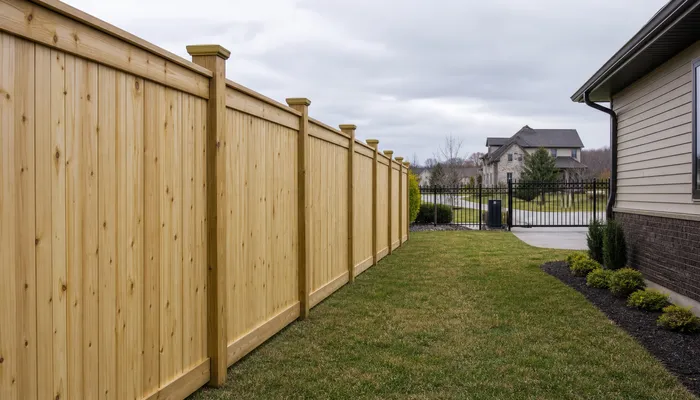
Berwyn’s residential blocks often reward a practical approach: define the rear yard, protect a side entry and keep the fence from crowding a garage or service walk. Homeowners comparing wood fence installation for Berwyn, IL should decide early whether the goal is full privacy, a shorter decorative run or a gate that gives daily access to bins and the alley. Wood remains popular because it can be repaired section by section and shaped to the lot, but the layout has to allow for posts, panels and future maintenance.
Cicero: Residential Fencing and Lot Coverage
Cicero’s mix of compact residential lots and busy corridors makes fence placement a planning issue as much as a material choice. Property owners reviewing residential fencing options in Cicero, IL should map the side yard, rear line and any gate that needs to stay usable in winter. A fence that looks generous on paper can feel tight once a garage, walkway or utility area is measured. The useful conversation is about the daily route people and vehicles actually take, not only the linear footage.
Forest Park: Commercial Frontage and Access Control
Forest Park’s commercial and mixed-use edges call for fences that separate public and private space without making the property feel closed off. A business comparing commercial aluminum fences in Forest Park, IL may need a clean frontage, a controlled side entry, a trash enclosure or a gate that lets staff in while keeping casual access limited. Aluminum and steel systems often suit these jobs because they can combine visibility, durability and a more finished look than a temporary barrier.
Ravenswood: Urban Lots and Automatic Gates
Ravenswood is identified in OpenStreetMap as a Chicago area around Lincoln Square and North Ravenswood Avenue, ZIP 60640 (OpenStreetMap). That urban setting changes the fence conversation: narrow side yards, shared edges, coach houses, alleys and vehicle gates all have to work together. A property considering automatic security gates for Ravenswood, IL should think about operator placement, power, entry controls and how a vehicle waits without blocking the street or a neighbor’s access.
How Chicago Fence Planning Across Communities Handles Materials and Access
Materials should follow the job. A wood fence can deliver privacy and a traditional look, but it needs air movement, proper post setting and a realistic maintenance plan. Chain link remains a straightforward choice for clear boundaries, pet areas and service yards where visibility matters. Vinyl and composite can reduce painting and rot concerns, though style, color and panel expansion still need to be planned. Ornamental iron and steel bring a more defined architectural line and are often used where security and appearance need to work together.
- Wood privacy: Good for rear yards, side yards and residential screening when the layout allows for posts, panels and gates. For a deeper look at security-oriented wood choices, see sturdy lumber fences for security.
- Chain link: Useful for clear boundaries, pet containment and service areas where airflow and visibility matter. The practical trade-offs are covered in the versatility of wire fencing.
- Commercial perimeter: Aluminum, steel and chain link systems can define parking, loading and after-hours zones. For a business-focused overview, see secure your business with perimeter fencing.
Access control is the other half of the decision. A pedestrian gate, a double drive gate, a slide gate and an automatic operator solve different problems. The right choice depends on how often the gate is used, who needs entry, whether the driveway slopes, and how the gate should behave when power or a sensor is interrupted. A fence can improve privacy and make access more deliberate, but it should not be described as a guarantee against theft, trespass or liability.
Permit and Site-Planning Questions to Settle Early
Fence rules are local. Before ordering panels, confirm the current permit, survey, height, placement and inspection requirements with the building department that has jurisdiction over the property. A current plat of survey or site sketch can save time because it shows the lot lines, existing structures and proposed fence location. If digging is involved, utility locating is a separate step and should be handled before posts are set. These planning steps matter more than a generic promise that a fence will “pass code,” because approval depends on the specific lot and the current municipal review.
It also helps to walk the property with the estimator. Note the gate locations, the direction the fence should face, the places where snow will be piled, and the spots where a vehicle, mower or delivery cart needs to turn. Photos of the property line, alley, meter or downspout can make the first conversation more accurate. A good estimate is not just a price per foot; it reflects access, removal, gates, posts, grading and the details that decide how the finished fence performs.
Seasonal Durability and Long-Term Maintenance
Cook County weather puts a fence through freeze-thaw movement, summer heat, wind and winter debris. Posts need stable footings, gates need room to move, and wood needs a maintenance plan that matches its exposure. Metal systems should be checked for coating damage and loose hardware. Vinyl and composite should be inspected for shifting panels or blocked drainage. A short seasonal walk-around—looking for leaning posts, dragging gates, exposed fasteners and soil movement—can catch small issues before they become repair calls. The goal is not a maintenance-free fence; it is a fence whose maintenance is predictable.
Frequently Asked Questions About Fence Planning in the Region
How Does Chicago Fence Planning Across Communities Differ From a Single-City Page?
A single-city page can focus on local service details and city-specific questions. This regional guide compares the wider pattern across Berwyn, Cicero, Forest Park and Ravenswood, then points readers to the city pages for a more local view. It is meant to support the city pages, not replace them.
Do All Four Areas Follow the Same Permit Rules?
No. Fence permits, surveys and height or placement reviews are handled locally, and requirements can differ from one municipality to another. Confirm the current rules with the building department for the specific property before installation. For a Chicago-area neighborhood such as Ravenswood, the applicable review should be confirmed with the city department that handles that property.
Which Fence Material Makes the Most Sense for a Mixed Residential and Commercial Block?
There is no single answer. Visibility, privacy, gate use, maintenance and the look of the block all matter. A residential rear yard may favor wood, vinyl or composite, while a commercial edge may favor aluminum, steel or chain link. The better starting point is the property’s daily use, then the material.
How Should a Property Owner Prepare for an Estimate?
Have the property lines, any survey, approximate linear footage, gate locations and photos ready. Note whether the job includes removal, a new driveway gate, access control or work near an alley or shared edge. Mention the property type and the outcome you want, such as privacy, security, pet containment or a cleaner commercial frontage.
Where Can I Find the City-Specific Fence Page for My Area?
The city links in this guide lead to the local pages for Berwyn, Cicero, Forest Park and Ravenswood. Use those pages when you want the local service view, and use this regional guide when you are comparing how fence planning changes across the group.
Start with the property, the daily route and the gate, then choose the material and the local page that fits. The city pages linked above are the right next stop for a closer look at each area, while this regional overview keeps the comparison in one place.