Skip to content


North Side Chicago fence permit planning is less about choosing a panel color and more about understanding how a property line, a local ordinance, and the way a neighborhood is built will shape the project. Illinois is a large and varied state, and fence rules are handled locally rather than by a single statewide code. That is why a homeowner in one Cook County village and a property manager a few miles away can face different paperwork, different height limits, and different inspection steps for what looks like the same fence.
This guide looks at the regional picture across five communities — Harwood Heights, Lakeview, North Halsted, Rogers Park and Union Ridge — without treating any one of them as the whole story. It is written for property owners and business operators who want to compare options, ask better questions, and understand when a fence project needs a closer look before installation begins.
Why North Side Chicago Fence Permit Planning Starts With Local Rules
Illinois is the sixth-most populous U.S. state, with Chicago as its largest city and Springfield as the capital (Wikipedia’s Illinois overview). The 2023 ACS five-year data estimate the state population at about 12.69 million (Census Reporter’s Illinois profile). Those numbers explain why the region contains so many different municipalities, villages, and Chicago community areas, each with its own administrative habits.
For fencing, that local variety matters. A village may publish one set of rules for front-yard fences and another for rear-yard privacy fences. A Chicago community area may fall under citywide zoning, building-code, and landmark review. A commercial corridor may have screening requirements that do not apply to a residential block. The common thread is not a single number; it is the need to confirm the rule that applies to the specific property.
Five Areas, Five Different Planning Contexts
Each community in this group offers a different starting point. The goal is not to rank them, but to show how permit planning changes with the built environment.
Harwood Heights
Harwood Heights is a village in Cook County, and its compact footprint means fence lines often sit close to neighboring properties, alleys, and shared edges. A contractor reviewing a project there should confirm the village’s current submittal requirements before ordering materials. Homeowners comparing bids can start with a fence company in Harwood Heights, IL that is comfortable working through local paperwork and property-line questions.
Lakeview
Lakeview is a name that requires care in a regional article because it can refer to more than one place in Illinois. For this group, the practical point is that commercial frontage, multi-unit buildings, and mixed-use blocks can bring screening, access, and gate questions that a simple backyard fence does not. Property managers evaluating commercial fencing in Lakeview, IL should ask how the fence will meet the sidewalk, how a gate will operate, and whether the property’s zoning or landlord requirements add review steps.
North Halsted
North Halsted is best treated as a commercial street corridor rather than a separate municipality. That changes the conversation: storefront edges, delivery areas, patios, and shared access points may need a fence or gate that balances visibility with security. A business planning fence installation in North Halsted, IL should confirm both the citywide rules and any block-specific or property-specific conditions before installation.
Rogers Park
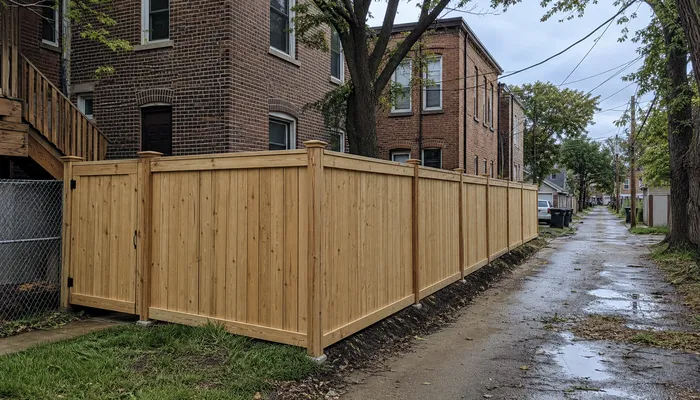
Rogers Park is a Chicago community area on the North Side, and its dense residential blocks, courtyards, and alley-facing rear yards make property-line review especially important. A homeowner or small multi-unit owner looking for a fence contractor in Rogers Park, IL should expect questions about survey lines, gate placement, and how the fence will meet an existing garage or alley. The same citywide Chicago framework may apply, but the site conditions are rarely identical from one block to the next.
Union Ridge
Union Ridge is a nearby area best used as proximity context rather than as an incorporated municipality. For commercial properties in and around that pocket, the fence conversation often turns on access control, screening, and how a gate will serve deliveries or parking. A commercial fence company in Union Ridge, IL can help frame those questions, but the property owner should still confirm the applicable jurisdiction and any shared-access agreements.
What to Check Before You Build a Fence in the Chicago Area
Good North Side Chicago fence permit planning usually begins with a short checklist rather than a materials catalog. The order matters because a property-line problem can change the entire design.
- Property lines and survey: Confirm the boundary before measuring. In dense neighborhoods, a fence set a few inches off the line can create a neighbor dispute or a revision later.
- Height and location: Front, side, and rear yards may be treated differently. A fence that is allowed at one height in a rear yard may need a different review at the front.
- Zoning and landmark context: Chicago and many suburbs review fences through zoning and building rules. Landmark districts and planned developments can add another layer.
- Easements and access: Alleys, utility easements, and shared driveways can limit where posts and gates can go.
- Utility locates: Before digging, confirm the correct locate service for the jurisdiction. In Chicago, 811 Chicago is the local one-call system; outside the city, Illinois JULIE applies.
- HOA or lease requirements: Private covenants can be stricter than the municipal code, especially for fence color, height, and gate style.
None of these steps replaces the municipality’s current written requirements. They simply help a property owner arrive at the permit conversation with the right information. In Chicago, for example, permit thresholds can depend on height, material, and landmark status, so a small fence should not be assumed exempt until the city or a qualified contractor confirms it.
Materials, Gates, and Property Type in Permit Review
Material choice is not only an aesthetic decision. It can affect how a fence is classified, how it performs under wind load, and whether a gate needs additional review.
On residential properties, wood, vinyl, and composite fences are often chosen for privacy, while chain link and aluminum may be used where visibility or cost control matters. Wrought iron and steel fences can define an entrance and support security goals, but they also raise questions about anchoring, finish, and gate hardware. Automatic security gates add a mechanical and electrical layer, so access, power, and safety clearances should be discussed early.
On commercial and industrial properties, the focus shifts toward perimeter definition, screening, and controlled access. A business may need a fence that separates customer parking from a service area, screens outdoor storage, or supports a gate system. Those goals can trigger different code sections than a backyard privacy fence, which is why a single generic quote is rarely enough.
The region’s freeze-thaw cycles and road salt exposure also affect post footings, finishes, and gate hardware. A material that looks good in a catalog may need a different anchor or coating schedule in an alley exposed to plowed snow.
Why Experience Helps Across Multiple Communities
Osceola Fence & Security Corp. has more than 50 years of experience serving Chicago-area properties, and that longevity is useful when a project crosses municipal lines. The team works with wood, vinyl, chain link, composite, aluminum, steel, and iron fences, as well as automatic security gates. In-house iron fabrication helps when a gate or ornamental section needs to fit an existing opening rather than a standard panel.
Permit assistance is another practical differentiator. A contractor who has prepared submittals for different jurisdictions can help a property owner organize measurements, site details, and material specifications before the review begins. That does not guarantee approval — the municipality makes the final call — but it can reduce avoidable back-and-forth. Qualifying projects are backed by the 1 Year Certified Craftsmanship Guarantee™.
If you are comparing regional approaches, our Chicago fence planning across communities article and our Park Ridge fence planning guide offer additional context on how lot layout and permit steps interact.
Frequently Asked Questions About North Side Chicago Fence Permit Planning
Do Chicago fence rules apply to every community in this group?
No. Chicago citywide rules apply within Chicago, but Harwood Heights is a separate village, and North Halsted and Union Ridge are better understood as corridors or proximity areas. Always confirm the jurisdiction that governs the specific property.
How should a homeowner begin North Side Chicago Fence Permit Planning?
Start with the property survey or plat, a tape measure, and a call to the local building department. Ask whether the proposed height, location, and material require a permit, and whether the property is in a landmark district or planned development.
What is the difference between 811 Chicago and JULIE?
811 Chicago is the one-call service for excavation within Chicago city limits. Illinois JULIE covers underground facilities outside the city. The right service depends on where the posts will be dug.
Can one contractor handle a project across several of these areas?
A regional contractor can often handle multiple communities, but the permit work is still local. Ask how the contractor will confirm each municipality’s requirements and who will manage the submittal.
Does a commercial fence always need a different permit than a residential fence?
Not always, but commercial projects often raise additional screening, access, or parking-lot questions. The answer depends on the property’s zoning and use, not only on the fence material.
A Regional Approach, Not a One-Size-Fits-All Answer
Fence planning across the North Side and nearby Cook County communities works best when it stays specific. The regional view is useful because it shows how many different review paths exist, but the final decision still belongs to the property owner, the contractor, and the local reviewer. Use this North Side Chicago fence permit planning guide as a starting point, then confirm the current requirements with the municipality that has jurisdiction over the property.
If you are ready to compare options, the city pages linked above are the right next step for each community. They provide a closer look at the local service context without pretending that every property in the region faces the same conditions.