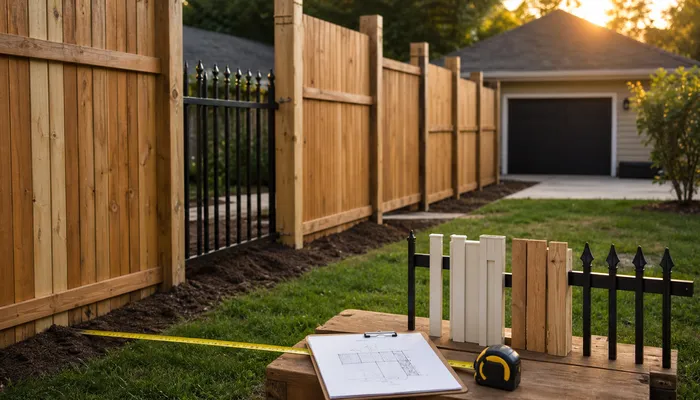

Most fence projects start with a material choice, and that is usually the wrong place to begin. The property owners who end up happiest with a finished fence line are the ones who spent an evening with a tape measure, a clipboard and a short list of questions before they ever looked at panel prices.
Park Ridge sits in Maine Township in Cook County, roughly 15 miles northwest of downtown Chicago and close to O’Hare. Its neighborhoods show decades of suburban building: narrow side yards, detached garages, rear alleys, mature trees and grade changes that a fence has to work around. That mix shapes fence planning in Park Ridge far more than any catalog does, and sorting out the layout and the municipal side first makes the material conversation much simpler.
What To Confirm With The City Before You Order Materials
Fence review is handled at the municipal level, and requirements are updated from time to time. Before you buy posts, panels or hardware, confirm the current requirements that apply to your property. The City of Park Ridge publishes its own guidance and forms through its official website, which is the right starting point for anything current.
The questions worth asking are practical ones: whether your project needs a permit, what the submittal package has to include, how the city measures fence height, which yard lines are affected, and whether your lot type is treated differently. It is also worth confirming orientation expectations for the finished side, any limits on materials or colors, and where easements, utility lines and drainage paths cross the property.
If your project sits on the Chicago side of the line, the fence permit checklist for Chicago walks through how that process differs. Park Ridge runs its own program, so the paperwork and the review path are not the same.
One point worth stating plainly: a contractor can measure the yard, prepare site details and assemble the drawings and specifications a submittal needs, and can walk the property with you before anything is filed. What no contractor can promise is the outcome. Approval, conditions and inspection timing belong to the municipality, and it makes sense to plan around that rather than assume it.
How Lot Layout Changes The Fence Plan
Two houses on the same block rarely need the same fence. A side yard that measures nine feet at the front gate can pinch to five feet behind the garage, and that pinch decides whether posts can be set cleanly with proper clearance or whether the fence line, the gate swing or both need to change.
Reading The Yard Before You Choose Panels
Walk the property line with a tape measure and note the things a sketch tends to miss: grade drops, tree roots near the line, downspout discharge, air conditioning pads, utility meters and the spot where the plow piles snow every February. In the older residential blocks here, rear alleys and detached garages also change how a fence meets the house, where a service gate belongs and how much of the yard stays usable.
ZIP code 60068 covers a housing stock that ranges from narrow pre-war lots to wider mid-century yards, so there is no single template. Measuring the actual run, and marking it in the grass before any digging, is the least expensive step in the entire project.
Gates And Access Points
Gates are usually where a fence plan succeeds or fails. A pedestrian gate needs a clear swing arc and a level pad. A double drive gate needs room for the widest vehicle that will realistically use it. If the plan includes an automatic gate, the operator, the power path and the safety hardware all belong in the layout stage, not after the fence is already standing. Solving that at the drawing stage costs far less than moving posts later.
Material Choices That Handle Chicagoland Winters
Freeze-thaw cycles, lake-effect snow and road salt are the three forces that age a fence line in this region. They act on materials in different ways, and the difference usually appears a few winters in rather than on installation day. Posts need to be set deep enough to stay put through heaving, and any material sitting in the splash zone along a driveway or alley will see more salt than the rest of the run.
| Material | What Winter Does To It | Maintenance Reality |
|---|---|---|
| Wood (cedar, treated pine) | Repeated moisture and freeze-thaw cycles work on the grain; posts and rails take the worst of it where snow sits against them. | Sealing or staining on a schedule, plus a post and gate check after the thaw. |
| Vinyl | Handles moisture well, but deep cold makes any rigid material less forgiving of impact from shovels, plows or fallen branches. | A spring rinse and a check of gate hardware. |
| Composite | Moisture-resistant and dimensionally stable, though performance depends on the specific product and how it is installed. | Low ongoing maintenance; confirm the manufacturer’s cold-weather guidance. |
| Chain link (coated) | Plow spray and road salt are the main long-term stressors, especially along driveways and alleys. | Inspect the coating and the tension, and tighten hardware as needed. |
| Iron and aluminum | Powder coating protects the metal; chips from plows or shovels are where rust typically begins. | Touch up chips early and keep hinges and latches adjusted. |
If you want to go deeper on the weather side, freeze-thaw cycles and road salt in this region explains what happens to a fence line over a full year, and which material lasts longest in this climate compares the options on service life rather than appearance.
From Plan To Estimate
Once the layout and material direction are clear, a contractor can give you a number that means something. Have these details ready and the estimate usually moves quickly:
- The property type and how the yard is used — pets, kids, pool, garden, rental.
- Approximate linear footage, or a rough measurement you took yourself.
- Material preference, plus any second option you want priced for comparison.
- Gate and access needs: pedestrian, drive, automatic operator, intercom or keypad.
- Known issues — grade changes, tree roots, an easement, or a neighbor’s existing fence.
- Your timeline, and photos of the property lines if you have them.
With those in hand, you can plan a fence project with a free on-site estimate in Park Ridge, where the measurements are checked on the ground and the material options are priced against your real layout instead of a rough guess.
On larger scopes — a full perimeter, an automatic gate, or fencing combined with access control — the GreenSky® Loan Program is available to qualified customers and is worth asking about. It offers a simple application process, a fast credit decision, multiple financing options and no prepayment penalty. Financing is subject to credit approval and applicable GreenSky® terms and conditions.
Work is covered by the 1 Year Certified Craftsmanship Guarantee™ on qualifying projects, and the team has been building fences, gates and ironwork in the Chicago area for more than 50 years.
Have a question that is specific to your yard? Call the residential line at 773-278-4762, Monday through Friday, 8:00 AM to 4:00 PM, or send your project details through the contact page and someone will follow up.